Python try except else: How to Use the else Clause
python try except else: Learn how the else clause in Python's try-except works, when it runs, and why it improves error handling clarity.
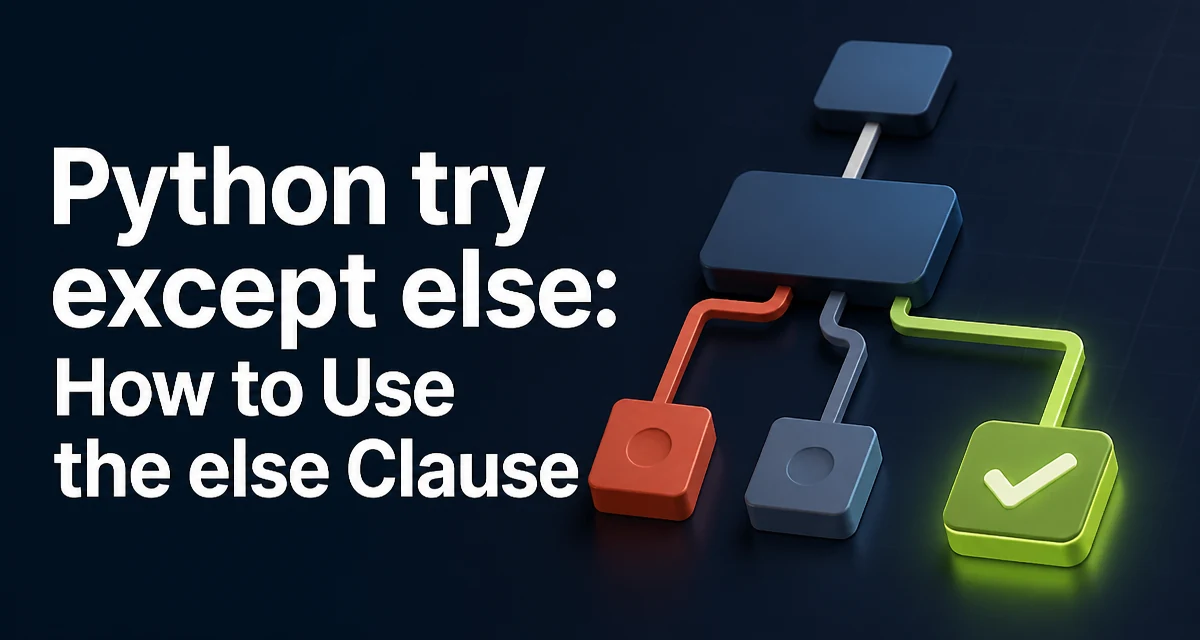
The else clause in Python's try statement is often overlooked, but it solves a real problem: it lets you separate the code that may raise an exception from the code that should run only when no exception occurs. In a python try except else block, the else section executes only if the try block completes without raising an exception. This small addition can make your error handling more precise and your code easier to read.
What the else Clause Adds to try-except
The syntax is straightforward:
try:
    risky_operation()
except SomeError:
    handle_error()
else:
    success_path()
The else block runs only when risky_operation() does not raise SomeError (or any exception that is not caught by an earlier except). If an exception is raised and caught, else is skipped. If an exception is raised and not caught, else is also skipped, and the exception propagates upward.
This behavior is distinct from simply placing success_path() after the try block, because code after the try statement always runs unless the process exits or an uncaught exception occurs. The else block, however, is skipped when an exception is caught. That distinction is the core value of else.
Why Not Just Put Code After the try Block?
Consider a common pattern: you want to parse user input and then use the parsed value. Without else, you might write:
try:
    value = int(user_input)
except ValueError:
    print("Invalid number"